2026-06-12
You bought a cleanser that everyone raved about. You invested in a serum that promised glowing skin. You even remembered to apply moisturizer every morning. Yet every time you look in the mirror, your skin still feels dull, irritated, or prone to unexpected breakouts.
It's frustrating, isn't it?
Here's something most people don't realize: healthy skin isn't only about the products you buy—it's about how you use them every single day.
As someone who follows skincare trends, I've noticed that many people spend hours researching the "best" products while unknowingly repeating small habits that quietly damage their skin. These mistakes rarely show up overnight. Instead, they build over weeks and months, leaving your skin confused, dehydrated, or constantly reacting.
The good news? Most of these habits are surprisingly easy to fix.
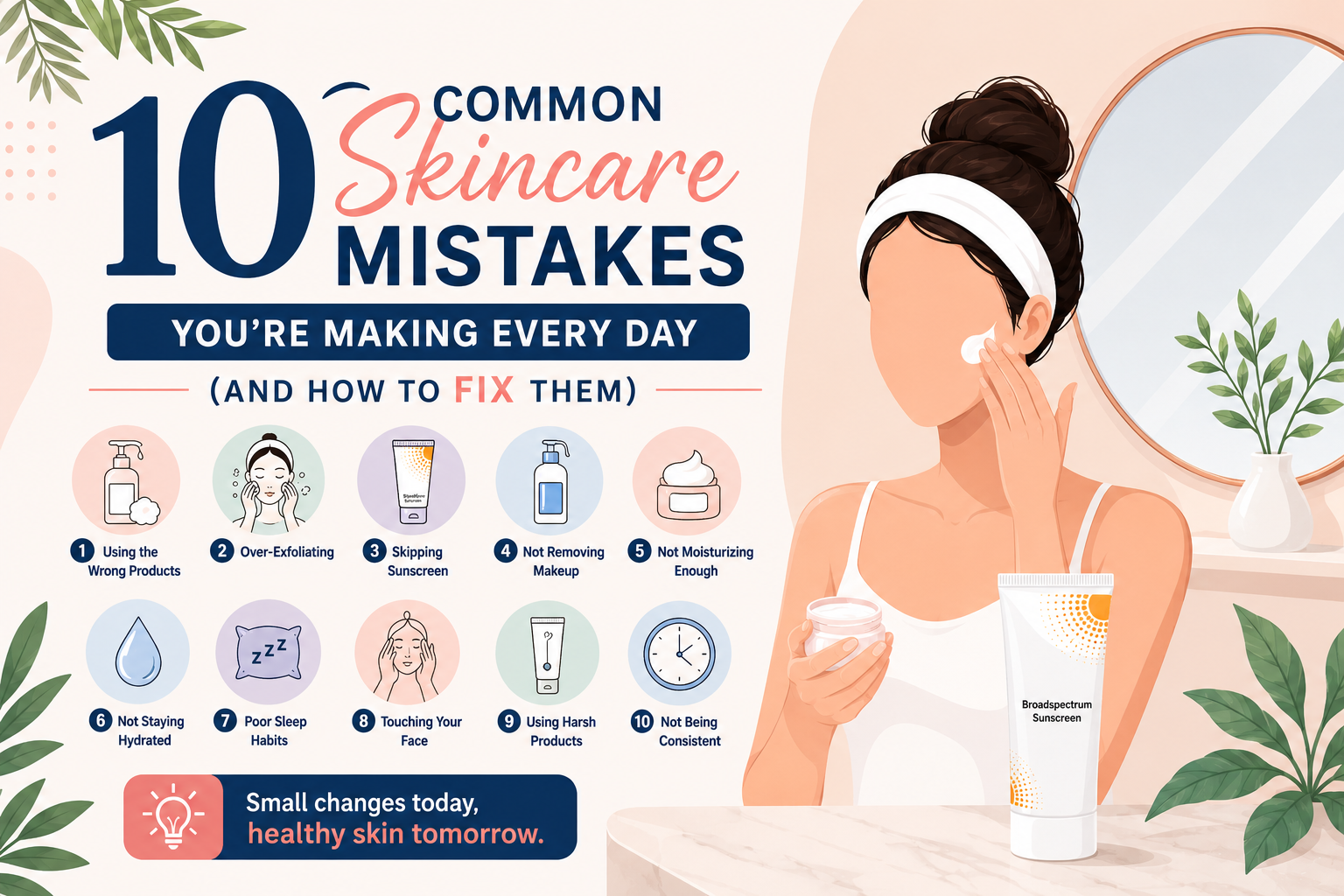
Let's look at ten skincare mistakes that many people make every day—and what you should do instead.
1. Treating Your Face Like It Needs to Be Squeaky Clean
There's something oddly satisfying about washing your face until it feels completely oil-free. Many people even associate that tight, "fresh" feeling with clean skin.
In reality, that tightness is often your skin asking for help.
Harsh cleansers or excessive washing strip away your skin's natural protective barrier. Once that barrier is compromised, your skin may become dry, irritated, or even produce more oil to compensate.
What to do instead:
Choose a gentle cleanser that removes dirt, sunscreen, and excess oil without leaving your skin feeling tight. Your face should feel clean—not stretched.
2. Skipping Sunscreen Because You're Staying Indoors
One of the biggest skincare myths is that sunscreen is only necessary when you're spending hours outside.
Think about your typical day. You drive to work, sit near windows, walk to grab lunch, or spend a few minutes outdoors running errands. Those small moments of sun exposure add up over time.
UVA rays, which contribute to premature aging and uneven pigmentation, can penetrate through window glass. That's why daily sun protection matters even on days when you're mostly indoors.
What to do instead:
Apply a broad-spectrum sunscreen every morning as the final step of your skincare routine, regardless of the weather.
3. Using Too Many Products at Once
We've all been tempted.
You watch a skincare routine online featuring eight different products, and suddenly your shopping cart is full of exfoliating acids, vitamin C, retinol, peptides, toners, masks, and serums.
More isn't always better.
Introducing too many active ingredients at once can overwhelm your skin, leading to redness, sensitivity, dryness, or unexpected breakouts.
What to do instead:
Keep your routine simple. A cleanser, moisturizer, sunscreen, and one or two targeted treatments are often enough for healthy skin.
4. Changing Products Before They Have Time to Work
It's easy to lose patience when you're hoping for clearer or brighter skin.
Many people stop using a product after only a week because they don't see instant results. Then they switch to something new, restarting the cycle over and over again.
The truth is, skin doesn't transform overnight.
Most skincare ingredients need several weeks of consistent use before you notice meaningful improvement.
What to do instead:
Give new products enough time to work unless they cause irritation. Consistency almost always beats constantly chasing the next trending product.
5. Forgetting Your Neck and Ears
Take a look at your skincare routine tomorrow morning.
Chances are you'll carefully apply moisturizer and sunscreen across your face—but stop at your jawline.
Your neck and ears receive plenty of sun exposure too, yet they're often forgotten.
Over time, this can contribute to uneven skin tone and visible signs of aging.
What to do instead:
Extend your skincare products down to your neck and don't forget your ears whenever you apply sunscreen.
6. Exfoliating More Than Your Skin Needs
Exfoliation can leave your skin feeling smooth and refreshed, which makes it tempting to do it frequently.
But there's a difference between healthy exfoliation and overdoing it.
Too much exfoliation weakens your skin barrier, making your skin more vulnerable to irritation, redness, and dehydration.
Ironically, excessive exfoliation can leave your skin looking worse instead of better.
What to do instead:
Exfoliate based on your skin's needs rather than following a rigid schedule. Gentle exfoliation once or twice a week is enough for many people.
7. Ignoring Your Skin When the Seasons Change
Your skincare routine shouldn't stay exactly the same all year.
A lightweight gel moisturizer that feels perfect during humid summer months may not provide enough hydration once winter arrives.
Likewise, a rich cream that's comforting in cold weather might feel too heavy during warmer months.
Your skin changes with the environment, and your routine should adapt too.
What to do instead:
Pay attention to how your skin feels throughout the year and adjust your products accordingly instead of sticking to one routine out of habit.
8. Picking Every Pimple You See
It's incredibly tempting.
You notice a whitehead before an important event and convince yourself that squeezing it will make it disappear faster.
Unfortunately, the opposite often happens.
Picking at blemishes can push bacteria deeper into the skin, increase inflammation, prolong healing, and raise the risk of post-acne marks or scars.
What to do instead:
Let blemishes heal naturally or use targeted acne treatments recommended for your skin type. Your future skin will thank you.
9. Expecting Expensive Products to Perform Miracles
Luxury skincare can feel exciting, but a higher price tag doesn't automatically guarantee better results.
Some affordable products contain excellent formulations, while some expensive ones rely more on beautiful packaging than exceptional performance.
Healthy skin comes from choosing products that suit your skin—not simply the ones with the highest price.
What to do instead:
Focus on ingredients, formulation, and consistency rather than cost alone. The right product is the one your skin responds to well.
10. Forgetting That Healthy Skin Starts Beyond Your Bathroom Shelf
Skincare products play an important role, but they aren't the whole picture.
Poor sleep, chronic stress, dehydration, smoking, and an unbalanced lifestyle can all influence how your skin looks and feels.
No serum can fully compensate for habits that consistently work against your skin.
Think of skincare as part of a bigger routine rather than a magic solution.
What to do instead:
Support your skin by getting enough sleep, staying hydrated, eating a balanced diet, managing stress, and maintaining a consistent skincare routine.
Small Habits Make the Biggest Difference
Beautiful skin rarely comes from one miracle product.
It comes from small decisions repeated every day—washing your face gently, wearing sunscreen even when it's cloudy, resisting the urge to pick at breakouts, and giving your skin the patience it deserves.
These habits may seem ordinary, but together they create the foundation for healthier skin over time.
Instead of constantly searching for the next trending product, take a closer look at your daily routine. Sometimes the biggest improvement doesn't come from adding another serum—it comes from stopping the habits that have been holding your skin back all along.
Frequently Asked Questions
What is the biggest skincare mistake people make?
One of the most common mistakes is skipping sunscreen. Daily UV exposure contributes to premature aging, uneven skin tone, and increases the risk of sun damage, even when the weather is cloudy.
How often should I wash my face?
For most people, cleansing twice a day—once in the morning and once before bed—is enough. If your skin feels excessively dry or irritated, a gentler approach may be more suitable.
Is it bad to use too many skincare products?
Yes. Layering too many active ingredients can overwhelm your skin barrier, causing redness, dryness, or breakouts. A simple, consistent routine is often more effective.
Can over-exfoliating damage the skin?
Absolutely. Excessive exfoliation can weaken your skin's natural barrier, making it more sensitive and prone to irritation. Most skin types only need gentle exfoliation once or twice a week.
How long does it take to see results from skincare?
Many skincare products require four to twelve weeks of consistent use before noticeable improvements appear. Patience and consistency are key.
Final Thoughts
Perfect skin doesn't exist—but healthy skin is absolutely achievable.
The difference often isn't about buying more products; it's about making smarter choices every day. When you stop over-cleansing, wear sunscreen consistently, avoid unnecessary product overload, and listen to what your skin is telling you, you'll likely notice changes that no expensive cream alone can deliver.
Remember, skincare is a long-term relationship, not a quick fix. Treat your skin with patience, stay consistent with the basics, and let healthy habits do the heavy lifting. Months from now, your skin won't remember the viral product you almost bought—it will reflect the everyday choices you decided to stick with.